March 27, 2023: Day -2
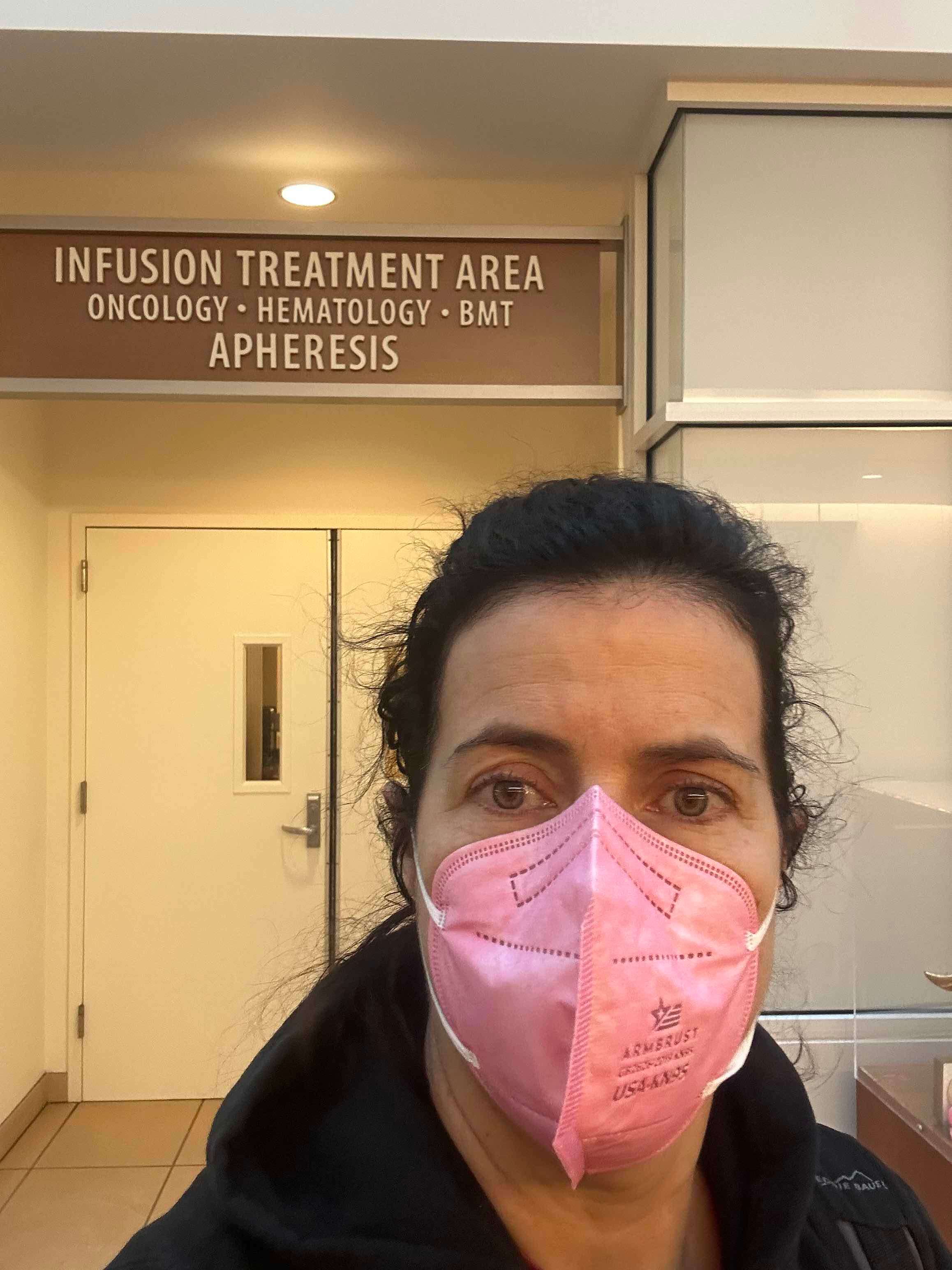
Today (Monday) was Day -2 or 2 days before transplant so that means it was apheresis day for stem cells and it started at 7:30 am. 🥱 (which is normally late for me but on hospital time, it’s early — weird how that works). Thankfully it’s not too far of a walk from LPCH and I got out of here without waking up Sam. Yay!
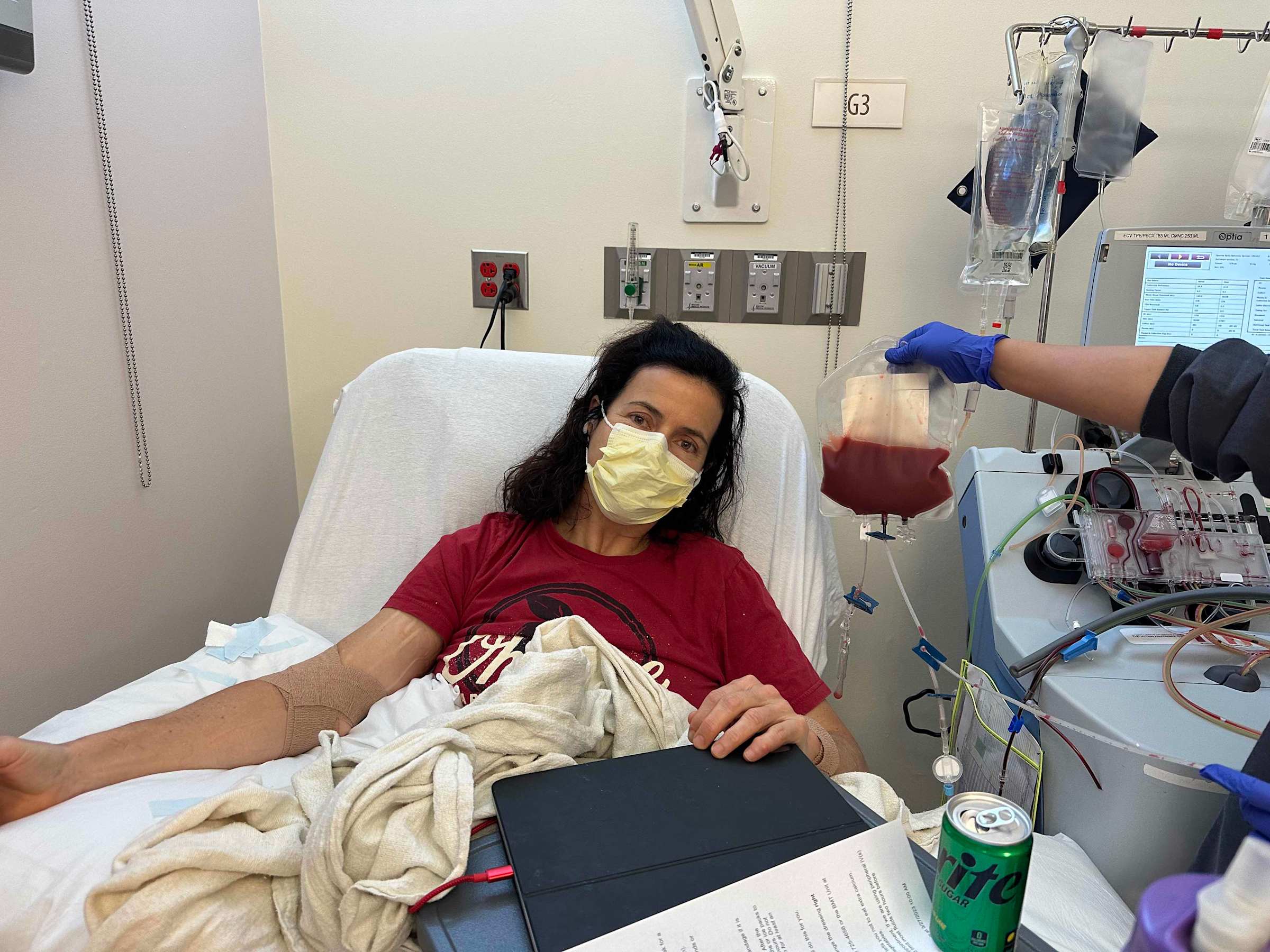
I have to say that I much prefer the apheresis crew that works on Tuesdays to the one that works on Mondays — much more skilled with my tiny but mighty veins (copyright Lesley R 😊) — but I am thrilled to report that 1 injection/day of GCSF from Thursday until yesterday plus an injection of Mozobil last night resulted in over 159 million stem cells being collected. Take that leukemia!
I have no idea what the threshold stem cell number was but I surpassed it so don’t have to go back for a 2nd collection tomorrow. Yay! Plus I wasn’t very confident in having to access my tiny but mighty right arm vein so quickly again anyways, even with the Tuesday crew at bat.
If you want to know more about the science, read on:
G-CSF stands for granulocyte colony stimulating factor, and it belongs to a family of molecules called cytokines. Cytokines are proteins that affect the growth of all blood cells and other cells that help the body’s immune and inflammation responses. G-CSF’s role for me was to stimulate the over production of stem cells in my bone marrow so that they would overflow into my bloodstream (vs. bone marrow collection which is used less frequently now. In that case, they draw stem cells directly from your bone marrow). This is called a Peripheral Blood Stem Cell collection (PBSCT — T is for transplantation).
Mozobil was given on Sunday night to make my bones release the stem cells into my blood (it’s pretty common for the bones to hold onto the stem cells).
And there are 2 types of stem cell donations: believe it or not, you can give them back to yourself which is called autologous. This helps treat Hodgkin’s and Non-Hodgkin’s lymphoma, myeloma, and plasma cell disorders. And then there’s allogenic, which is what we are doing: a related or unrelated haplo or better matched donor donates the stem cells (in my case, I am a half-match, or haplo-donor).
The process of apheresis means you sit in a (thankfully comfy and adjustable in my case) chair and have a large needle in one arm for the blood withdrawal and a smaller needle in the other arm for the blood’s return. I used my right elbow for the withdrawal and my left larger than it probably should be vein right above my left wrist for the return. The process took 4.5 hours and I watched Pez Outlaw (which is super! In a very quirky sort of way. It’s, at its heart, a love story between a very quirky man and a remarkable woman). I also sorted through photos so my friend could make 2 posters for Sam’s room (thank you Maria!). I started with 80 or so and had to get it down to 36 +/- —no small task for me 😂. )
And my stem cells were whisked away by a team of people wearing white coats so that they can remove the alpha and beta t-cells prior to Wednesday’s transplant (thereby reducing the risk of graft vs. host disease). Thank you Dr. Alice Bertaina for figuring out the science and bringing it to Stanford (only a few hospitals do this process so I’m grateful we have it available to us).
#FULeukemia
#LFGStemCells
#TeamSamStrong
24 comments
Leukemia will be the defeated villain!